


I’ve written a lot about the creative process, inspirations of Coppola, Herzog, Jodorowsky, and my sister Nina… but I realized I can be most helpful today talking about email settings. Sexy, huh? But listen up, if you’re overwhelmed, I can help you.
Over the years I’ve come to believe that one of the biggest enemies of creative life is drowning in open loops that chip away our precious decision-making power. So, I’m offering my most practical essay: my patented Ari Gold Restart Operation (AGRO… that’s a surfing joke) to protect the part of you that makes things.
Because: there’s a version of the artist in you that we rarely talk about: the endless communicator, sleepless on a friend’s couch with 340 unread emails, a pile of business cards from mysterious strangers, and the slow-rising panic that somewhere in that mess is a collaborator who could change your life if only you could figure out how to safely drink another coffee at 2:37am.
People ask how I manage a film company out of my backpack. The systems I’ve developed below are my unglamorous but effective infrastructure, which I’m sharing in the hopes of helping you create your masterpiece, while still executing the almost unfathomable amount of chatter that is required to make movies (or build eco-cities, or whatever it is you’re doing this month).
AND… as a dessert for this brittle meal, at the end of this article, I’ll share a quick way to understand the three types of human beings in your work-world, to make sure you’re actually communicating with the right people, and not being sabotaged….
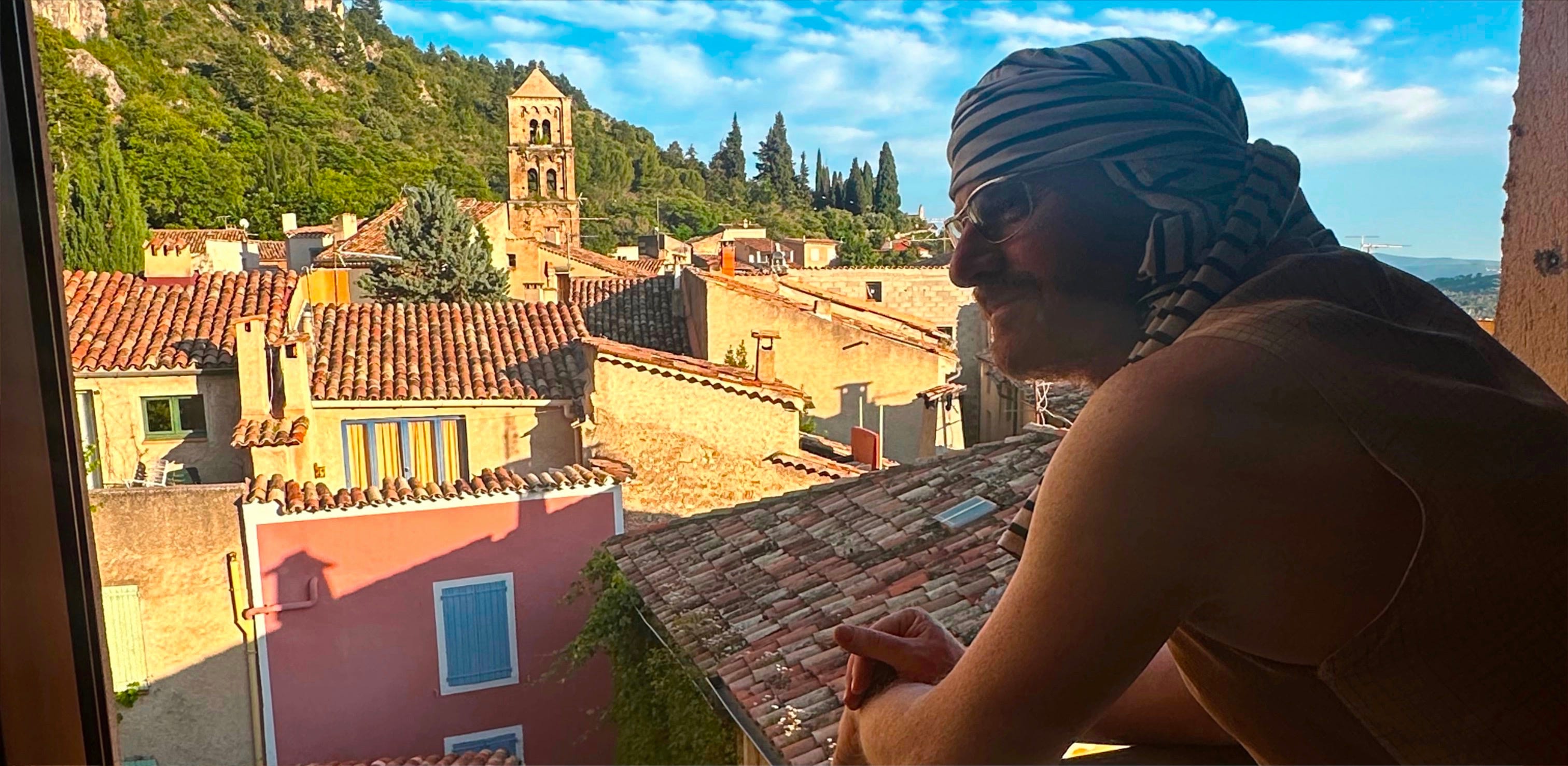
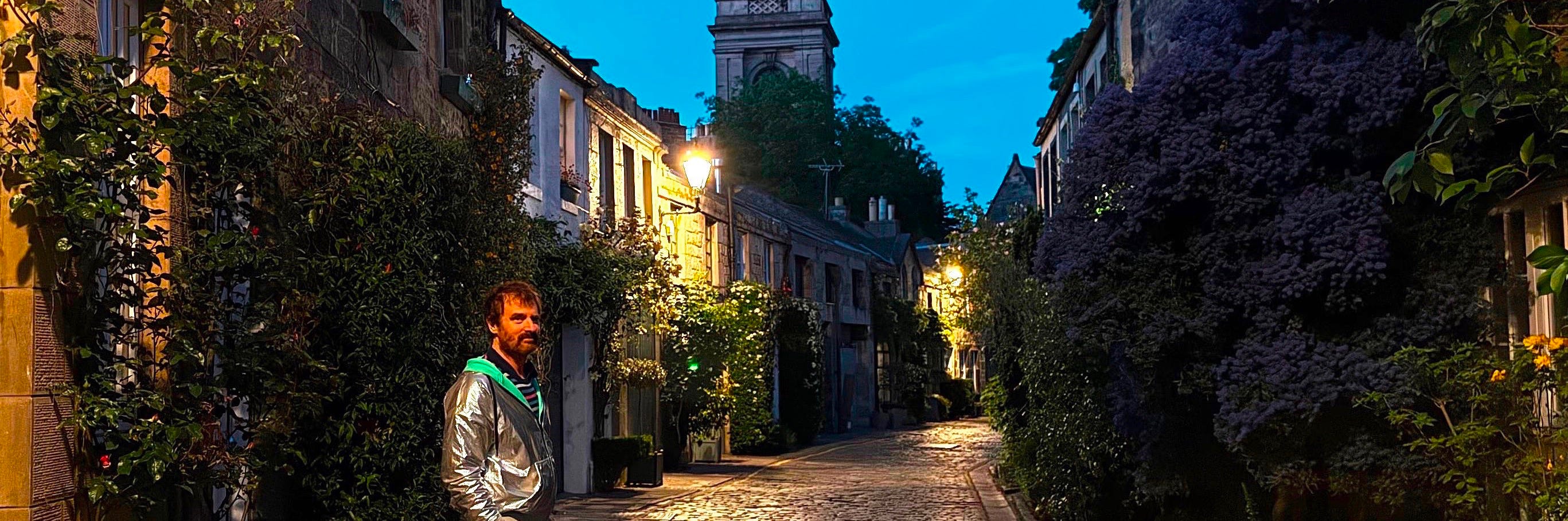
The image I keep in my head is an old Italian man in a village on the Amalfi Coast (why not). Every dawn he steps out with his espresso, and sweeps away the trash the tourists left, and the leaves the trees dropped. He’s not solving his whole life. He’s just clearing his cobblestones so his mind can approach the day with clarity. And then he paints on his easel.
How do we do this?
Start at zero
Here’s the foundation everything else sits on: Start your life over with a fresh inbox.
Before executing the organization system I’m going to present below, you’ll need to dump your old system. Here’s what I recommend: take the 157,000 emails you have in your inbox, select ALL of them (yes, all of them), and move or tag them into one archive folder called “Z Archives”. (I call it “Z Archives” so it sits at the bottom.)
You have not lost anything. It is all still searchable forever in Gmail. But your inbox is now empty. Start at zero, catch up on the few things that actually need you today, and then use the following system from here…
Sexy email settings
Two email settings make this sustainable. First, turn off threading, so each message stands on its own and nothing hides inside a collapsed conversation. Second, set your “delete” and “archive” buttons on your phone, and computer email program, to always send everything with a single click to that Z Archive folder (rather than deleting), so you can fearlessly clean the leaves in one motion. (Note: sometimes, when I’m moving to a new phone or refreshing my gmail account or whatever, I’ve had to make a few Z Archive folders… this is fine, just make sure all these dump folder live on the server… but get those old communications out of your face!).
The point is not to organize. You do not need a beautiful filing cabinet. You need rapid access to a clean set of cobblestones.
Mixing almost everything into one archive sounds chaotic, but it is the opposite: it is what lets me move through my inbox fast, because I am never standing there deciding where each thing should go. I archive almost everything the moment after I reply to it, regardless of which project it belongs to. (I only put emails into a dedicated project or geographical-friend-group folder like “Helicopter” or “Italy” when I genuinely know I will be diving back into those ten emails again and again in the future.)
I do this cleanup every morning until the inbox is nearly empty, after my morning meditation, when my mind is also clean, so I can get through even 200 emails in about 20 minutes. The leaves are off the cobblestones before the day has even started. How?
Email folder 1: the follow-up folder
This email follow-up system is the single biggest idea I can offer you, and the one I recommend above all others.
A few years ago I realized I could make one folder - really the only separate folder I use with any consistency - and call it FollowUps. This is for the dreaded open loops.
There are two kinds of open loops: (1) conversations with people who need to be reminded of something later, and (2) conversations with yourself, where you are waiting on a document or a decision before you can finish.
The mistake almost everyone makes is leaving these unfinished things sitting in the inbox as a reminder. But a visible open loop does not keep you on track. It clutters your soul. Every time your eye passes over it, it taxes you a little.
In my calendar, I set two hours a week (Thursdays 10-12 for me) to open my FollowUps folder, and skim and re-ping everything that needs to be re-activated. Anything I can’t fully handle today drops into the FollowUps folder and out of my face.
The use of this is psychological as much as practical. Because you’ll know with total certainty that every loose thread will get checked once a week, you’ll be free to forget it the rest of the time. You get to be fresh every day! Nothing is lost, but nothing is nagging you.

Email folder 2: the drafts folder
The other thing that keeps my inbox clean is that I begin replying to people almost the moment I receive an email, usually on my phone. I do not write the whole reply, I just dictate a few words to remind myself what I wanted to say, then close it, archive the incoming message - and the phone saves my unfinished reply into Drafts.
Then periodically, also on a schedule (when I am at my computer rather than my phone and my head is clearer), I go through the unfinished Drafts, finish what I started, and send it all out. The half-thoughts become real messages, the emails leave the cobblestones.
Those two email systems, the FollowUps folder and the Drafts folder, work together. One holds the things I cannot do today. The other holds the things I can start but can’t finish yet. And underneath both is the same single move I keep coming back to: sweeping the leaves off the cobblestones as fast as they fall, keeping my inbox from looking like my Italian bachelor’s old-town street after British tourists barreled through for spring break.
(Small addendum on email: I believe it’s better to use a real email app, like the one built into the Mac, instead of logging into Gmail in a browser. An app lets you organize everything into folders with one motion, and it lets you keep working through your mail when you have no internet. On a long flight, or on a mountaintop, you can blast through hundreds of emails and they’ll all just send the moment you land. If your entire system lives inside a browser tab, you lose that capability. Use the browser version only when you need to search for old things, but not for your daily tasks.)
The photos app as a second brain
Now, how to manage festivals, conferences, parties, where you meet hundreds of people, and hundreds of conversations are happening in a dozen messaging apps?
Screenshots.
If I can’t reply to someone and I know their sms or instagram or WhatsApp message will get buried, I quickly screenshot the thread. With new people, I also screenshot or take a photo of their business card, or name tag, or face (with permission), and I scrawl a quick note across the screen with my finger right there in the moment. A word or two about what we said. That is enough.
Then later, when I am captive on a bus or a train or a plane with nothing else to do, I open my camera roll, synced to my computer, and go through all of those photos and screenshots, and I say hi to everybody, or finish the conversations that got buried. The note refreshes my memory and theirs. “Great to meet you at the bar after the Cannes screening, you mentioned you handle Scandinavian rights.” That tiny photograph turns a fog of faces into a real follow-up. (I delete the screenshots when they’ve served their purpose.)
This is not just a festival trick, it can be snapping an article someone sent you to read, an idea to investigate. Once a week, when I’m a little bored and want a task that doesn’t require much brainpower, I scroll back through the screenshots and simply execute whatever each one was asking for: research, outreach, nice to meet you. I’ve remembered really crucial ideas, and great people I might have lost, this way.
The camera-roll becomes a to-do list I keep without effort, which I can finish off when I might otherwise waste time staring at social media or some other garbage.
Why I meditate, and why I do everything fast
As my friends know, I’ve been doing Transcendental Meditation consistently for about a year and a half now. I actually learned it around nine years ago, but it was listening to David Lynch’s autobiography that made me decide to give it a try again and do the full 20 minutes, twice a day, the way the technique is meant to be done. There are many wonderful forms of meditation, but for whatever reason, this is the one that has worked the most powerfully for me.

For me, it is boring. It feels like nothing is happening at all. And yet my cheerfulness, efficiency, and ability to move through life with less friction are all radically improved. Things that might have eaten five hours, I glide through in 40 minutes. So, the time I spend meditating does not cost me time: it gives me time back, many times over. As the saying goes, if you don’t have time to meditate, you need to meditate.
And this points at a larger principle that runs underneath this whole essay. It is almost always more efficient to do things fast. I do not mean rushing the big artistic explorations. I mean the small creative and logistic decisions that are usually bogged down by doubt and insecurity and chaos.
So many creative people I know burn enormous amounts of brainpower agonizing over tiny decisions. What to post on Instagram. How to phrase an email. Whether to bother double-tying their laces. Etc.
If you are having fun with a decision, wonderful. If you are deep in an artistic brainstorm, that’s sacred and you should stay there as long as you like. But if you’re even slightly resisting, weighing and re-weighing each little choice, then by the middle of the day, and certainly by the end of it, your capacity to be creative and in flow will be… poopy-pants. (Official term: Pu P. Pants.)
Your precious mind has a limited amount of decision-making power in a given day. Everything that does not require your genius should be done fast, precisely so that your genius is still there when something actually needs it. So practice the art of replying quickly, deciding quickly, acting immediately. Do right now the thing you would otherwise put off for an hour, a day, a month, a year. Whenever it is… do it now. Otherwise it invisibly eats you.
That’s how I filmed an entire feature film, Brother Verses Brother, a few weeks after thinking of the idea for it. Because I’d swept the trash off the cobblestones. Wax on wax off. And now on to the essential-to-understand Three Types of People…..
Three types of collaborators
I will leave you with one more filter, because no comms system survives contact with the wrong friends. In my experience there are only three types of collaborators. Do your best gut-check-plus-evidence-seeking vetting to assess who is who.
1 - There are wonderful people who follow through on their word. Treasure them, hold them close, work with them forever. Return all favors.
2 - There are wonderful people who do not follow through. Once you realize who they are - promoter types - the move here is not to write them off. It is to hold their hand and gently insist they do the thing (whatever the thing is) right there in front of you, while you are joyously together, before the moment passes. You can work with these people, too, and their love and enthusiasm will be fun and inspiring, once you stop expecting them to execute exactly what they promise. Return all favors to them too! But don’t get mad when they forget. You knew who they are!
3 - And… yes, there are bad people. Liars, thieves of your creativity, resentful assholes, jealous backstabbers, people who try to sabotage you. It’s real. Maybe they’re in pain. Who knows. It’s not your job to fix this situation. Trust your gut, if you suspect someone is of this group. Or if you are already working with them - once you realize they are in this category - do whatever you can to run as fast as you can. Return… all… favors…
The art is learning to tell the difference between these types early: ask your gut and ask for references. And as much as you can, spend your one life, and your limited reserve of daily attention, on the first two.
“And, in conclusion,” as my sixth grade essays put it
I hope this helps you. Here’s a review!
Sweep the porch. Keep a folder for open-loops, and a folder for drafts. Screenshots for all the conversations and people you’re managing. Meditate so the work goes easy. Decide fast so you can apply that flow to the creativity that is your gift. And surround yourself with people who follow through, and know what love is, and make you laugh.
All of this is in service of the only thing that matters, which is keeping your spirit fresh, to make the more beautiful world you are here to make.
Let me know if you have any other tips, or if you try this, keep me posted if it helps you. If this post helps even one person get it done, then it’s worth it!
Next time I’ll have more poetic musings. Like maybe a sonnet about laundry.
Ari
Really neat system. I’m trying it. 2 questions:
Is “followups" a gmail linked folder… or do you pull them off server and only on Apple Mail computer?
How do you deal with a To Do List doc? All the work tasks to keep on radar… health stuff, home management, personal biz….
Email tips are golden! (pun intended) Highly concur on efficacy of any kind of meditation; TM is one of the easiest to learn. I too credit David Lynch for my conversion, as well proselytizing mediation (read his book "Catching the Big Fish"). Thinking on the 3 people...