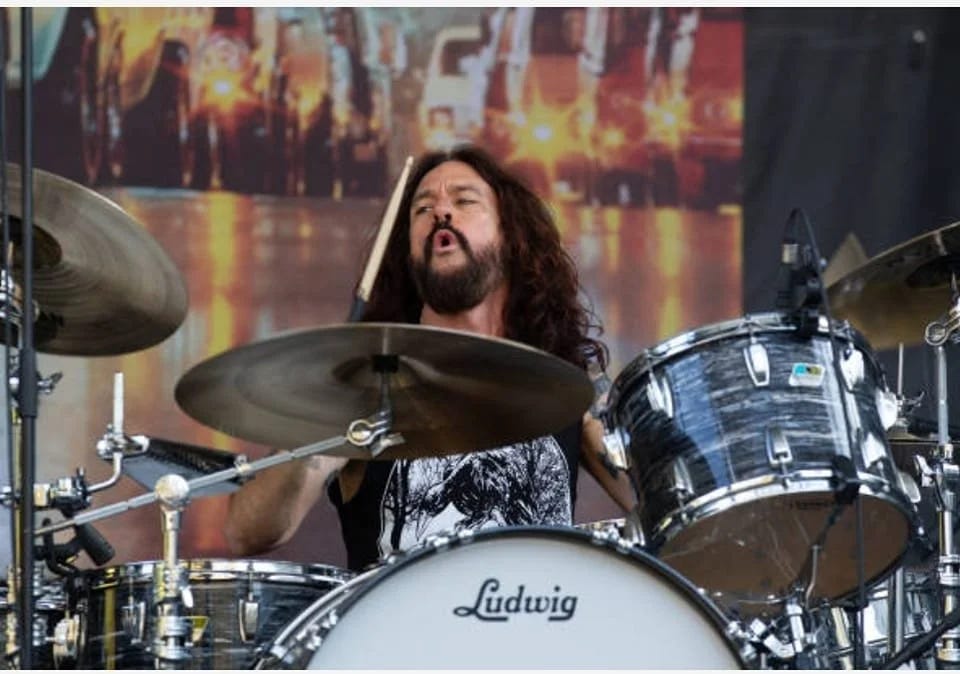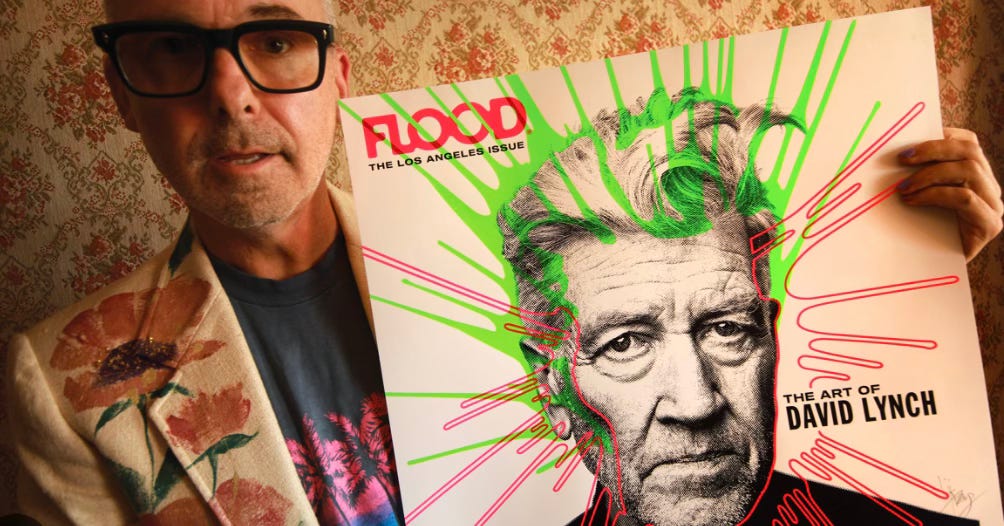

Director’s Note: “Scott Reeder speaks about rhythm the way craftsmen talk about time: patiently, honestly, without mythology. What stayed with me wasn’t just his love for Neil Peart or Van Halen, but his relationship to practice, the humility of showing up every day knowing you’ll never fully “arrive.”
This session drifts through memory, mentorship, teaching, loss, and the strange way music lives inside the body long after the last note fades. Scott reminds us that the great ones never stop listening — to the beat, to each other, to the space between the notes.
At its core, this conversation is about devotion. To rhythm. To learning. To staying open long enough for the music to keep teaching you who you are.”
The Discipline of Becoming
Scott Reeder reflects on Neil Peart’s influence not just as a drummer, but as a model of lifelong study. From early marching band experiences to moments of frustration, mentorship, and self-discovery, Scott shares how discipline, humility, and repetition shape real musicianship. The conversation explores the idea that mastery isn’t about “getting it,” but about recommitting — over and over again — to the work.
Rhythm, Memory, and the Body
The discussion expands into how music lives inside the body and brain, from childhood development to aging artists. Stories of Glenn Campbell, Music Cares, and the neurological power of rhythm highlight how music becomes a form of memory, survival, and emotional continuity across a lifetime.
Van Halen, Space, and Feel
Reeder and Ari dive deep into Van Halen, beat placement, swing, space, and feel — unpacking why groove lives between the notes, not on top of them. From studio tricks to live performance realities, Scott breaks down how feel is learned through listening, watching, and staying open. The conversation ultimately lands on a shared truth: the greats never stop learning, and neither should we.
Watch video version here:
RAW TRANSCRIPT (Pardon the old-school glitches):
Ari Gold: How about you, Powell? You like drums? I’m not pussyfooting. I’m double bass drumming. Welcome to Hot Sticks Drum Show, presented in conjunction with Drum Channel. I’m Ari Gold, Guinness World Record holder for air drumming and director and star of the air drum cult comedy Adventures of Power, featuring Neil Peart and an all-star cast. Stream Adventures of Power at airdrummer.com and support the Grammy Music Hairs Foundation. And check out other episodes at hotsticks.fm. And now let’s chat with the world’s greatest drummers and more about music and the human heartbeat. Imagine that. And I’m so happy to have you all here. We are honored. And I’m going to do an air drum roll. Oh, no, you guys are already here. To my to one side of me. I’m not sure which way I’m pointing. Scott Reeder. drummer extraordinaire of Fu Manchu and his neighbor’s heads, I’m sure. And Kai Ahrens, artist. Okay. Is there a flux capacitator in there that we can spike or something? Yeah. Yeah. I liked Ari’s thing doing this. That covers all bases. Just keep rolling, guys. You can hear it on Instagram. It’s that way. It’s that way. This is an airdrum, a very famous airdrum move. When I was in the Guinness Book, when I got into the Guinness Book, I did a cross. So I’m practicing my Guinness World Records. Guinness Cross. Those of you on this Instagram, we’re doing a live stream. Come over to Fu Manchu Band’s Instagram page to watch us there. Because Scott Reeder of Fu Manchu is with us. And I’d love to ask you, Scott. We connected because of Neil Peart, drummer of Rush and person of so many wonderful people. facets of life. What is, what was your, you want to share a little bit of your experience with Neil Peart and what he meant to you personally and musically?
Scott Reeder: Yes. Wow. I think I think wow encapsulates pretty much all of it. Yeah, I mean, I you know, I think everybody of obviously like our generation went through a very heavy Neil phase. First, it was the wow, I’ll never be able to do anything like that. phase. And then I think it was the next phase was, okay, maybe I can get close to that. Actually, I’ll have a good story that kind of encapsulates the whole thing for me. So when I was in junior high, I was in marching band. And, and I had been in like, you know, elementary school bands and all that stuff. And I had a great band teacher that she changed my life, literally changed my life and pointed me in the direction that I needed to go. And, So, you know, at the time, early 80s, you know, MTV coming on and being exposed to all these drummers. I’d always been interested in drums, but playing them and, you know, getting into there. But Rush was always that thing that like, well, you know, you might be able to play some of that stuff on MTV, but you can’t do that. Right. So then. I don’t know where it kind of shifted to where I could act. I actually could do that, but signals was my record. Everybody says moving pictures, but signals was, was kind of like, I was too late for moving pictures. I kind of caught it late. And, uh, but signals was the album that I really like got into. And that, yeah, that was, it was long.
Ari Gold: Were you air drumming to on signals?
Scott Reeder: Well, I mean, I was probably more so air drumming to, uh, probably more subdivisions because that’s the song I wanted to learn, you know? And so, yeah.
Ari Gold: So the offbeat, yeah.
Scott Reeder: And actually that, that one fill and fun and funny enough, the one fill that’s in the second, it’s like pretty much the third verse after the first solo. And I use this on my students. Now I tell them, I say, if you can never figure out how to count a fill, you just sing it to yourself. And yeah, And you vocalize it. You make it a vocal, you know, a rhythmic melody, so to speak. So that’s how I figured that out. Well, I had a band teacher, obviously, in elementary school that was great. I had a first year junior high band teacher that was awesome. My second year junior high school band teacher was horrible. He was basically your whiplash drum teacher.
Ari Gold: Yeah.
Scott Reeder: And so I had memorized and I sort of moved myself up from snare drum to this. It was great. It was like a three roto Tom set up. And I was so excited to play it and, you know, learn that not quads, but trios, basically. And so when he came in, he said to everybody, you’re going to have to everybody’s going to have to re-audition. because I’m a new band teacher anyways, long story short, I didn’t know the music. I just memorized the parts and I could read music, but I was in that phase where I was kind of getting away from the written thing and going, I really don’t need this because I can figure it out on my own. And so I didn’t pass the audition and he kind of got in my face and did the whiplash thing and went, you know, you don’t even know this stuff. You don’t really belong in this position. What makes you think that you can play these things? And I just looked at him and I said, I know subdivisions. I don’t need this. And that was the end of my, my marching band career pretty much for junior high. I was like, you know what? I’m out. See ya. I’m just going to go learn sign one of that album. Know what that meant. He didn’t know it. No, actually his response to that, he goes, I don’t know what that is. And I’m like, exactly.
Ari Gold: Can you sing the film that you’re talking about?
Scott Reeder: It’s the one that goes, but, but, but, but, um, So it’s it’s it’s after the it’s after the lyric that says lit up like a firefly.
Ari Gold: Oh, yeah, yeah.
Scott Reeder: It’s it’s the it’s the feel that comes after that. So that was that was my first that was my first deal phase knowing it. And then I think as you know, time went on. I mean, I saw them live. I saw a guy air drumming in the crowd with glow sticks. And I said, well, I’ll never be as good of an air drummer as that dude. So I’m not going to do it. Uh, I’m going to watch him do it, but it was great. Uh, and this was back when Neil was playing everything note for note live. And then, you know, as time went on and I got into other music, it kind of waned and waxed and stuff. And I saw them, you know, in the mid nineties, it was awesome. And I kind of lost touch with, uh, with his drumming, really, you know, in the late 90s. And obviously they had their elongated break. And then when they came back, Vapor Trails just knocked my ass off. I was I was completely floored by the drumming and just the intensity of the album, not really even knowing the backstory to it and then knowing the backstory. And I think the thing with with Neil that kind of resonates most with me is the craft and the craftsmanship and the the dedication to The just keeping it going and getting better and changing things and that whole probably brought even closer to home now with Eddie Van Halen’s death and just the whole thing of you’re in this. This is not something that you just do and you think you can get it. If you think you’re going to get it, then you probably need to stop because you never really get it. You know, I told a student today that whenever I sit down, I have to convince myself that I can still do it, you know. I know I’m capable, but am I able, you know. And or maybe it’s I’m able, but am I capable? I don’t know. But I think the dedication to the craft and the dedication to always trying to be the better of what you do. That was Rush. That was Neil. That’s Eddie Van Halen. That’s anybody that’s in it for life. You know, it’s like you don’t. You just practice and you keep playing and you don’t stop. You’re either in it for life or you’re not. And that’s it. I think it’s pretty intense to think that those guys that were two giants of... I know we’re veering off the subject of drumming, but Eddie Van Halen made me, when I saw him play live, it was the same thing as seeing Neil. I was like... these guys are actually above everybody else at what they do. And that’s where I want to be. And I know I may not ever get there, but at least if I kind of shoot in that direction, I might get in the ballpark. So maybe I can have something of my own, you know?
Ari Gold: Right. Right. Um, Yeah. So, Kai, let’s talk about Van Halen. I know we’re getting off the subject, but I know, Kai, you’ve got a hard on for Halen and we all did. But you maybe have a special special connection to them.
Kii Arens: Well, I mean, when I was in seventh grade, I saw David Lee Roth come down an escalator into a food court. And I was freaking my mind out about eruption about the same time. And he it was his perfect David Lee Roth era where his hair was that bleach bleach blonde and the roots were really showing. And I went up. right at the edge of the escalator. And I’m like, you know, seventh grade, dumb, dumb shit. You’re David Lee Roth. He had to have pushed me out of the way because people were backing into him. And so he kind of went into the food court and I’m like, oh my God, I’m such an idiot. I’m nervous. It’s David Lee Roth, but where’s the rest of the band? So I went up to David Lee and girls were already surrounding and he gave me an autograph. And I said, hey man, like where’s, where’s Eddie? Like where’s Alex? And get away. So we start searching around and I walk outside and this tour bus pulls up and I’m like, yes, this has got to be the rest of the band. And all of a sudden, all these old dudes start pouring out of the bus. They’re all carrying guitars and shit. And the bus driver comes around and starts pulling out all the gear from underneath the bus. And I look down to the dude and I go, hey, is this Van Halen’s road crew? And all the dudes walking out of that bus just stopped and looked at me. And the bus driver goes, that’s the Doobie Brothers. Ha ha ha ha ha ha. Oh, boy. But truthfully, I ran into Eddie one year ago coming out of Arts Delicatessen. Somebody in a fucking blue Lamborghini came flying into that place and it was the valet guy. And I knew the valet guy and I’m like, dude, you’re driving this thing like a wild man. And he goes, well, you would too. And all of a sudden Eddie walks out and I’m like, just like I had to say hello and say you are my all time favorite guitar player for many reasons and rhythm guitar player at the same time. Yeah. And to find out that the poster that I created for their show at the Hollywood Bowl, which was their last show ever, he had hanging in his bedroom, he told me.
Ari Gold: That’s a great poster, by the way. I remember seeing that and going, that’s cool.
Kii Arens: Thank you. And I was I was like, yeah, that’s I like that. That’s pretty cool. Thanks, man. It’s great to see bands at the Hollywood Bowl like that, too, because they always use I remember seeing ELO there a couple of summers ago. Great. It was and that was an amazing show because it was it was not just ELO, but it was the L.A. Phil with them. So all of those all of those parts and all that stuff that you hear are always covered. But they use the shell as part of the show. And they put so many graphics on it and all that stuff. So I never saw – I know Rush played there a couple of times, but I never got to go to any of those shows. I remember putting the headphones on to 2112 up in my brother’s room and getting lost. And the syrinx, the what of syrinx?
Ari Gold: The what of syrinx, exactly. What’s it called?
Kii Arens: The temples.
Ari Gold: Yeah, the overture.
Kii Arens: Yeah. Like, this is how a guitar is born. And it’s like, my brother had the logo silkscreened on his shirt. And it was like, that majesty was so ever-present within an album and an album cover. And the mystery that lies right in there. And, you know, my sister quickly started doing calligraphy of many of Neil Peart’s fine lyrics. And, yeah, that’s my... You know, I love Rush, although why are we here?
Ari Gold: Because we’re here. Roll the bones.
Kii Arens: Thank you. I don’t know where that came from, but. It’s a good one. You know.
Scott Reeder: It’s funny you were talking about people who left us this year and, you know, it’s a. it’s tough. It’s like, I mean, but the, this is the thing is like, we, we, we, um, what is the meaning of music is to remind us of life and to remind us of the preciousness of life and the awesomeness of life. Right. And these guys, Eddie and Neil have been, um, so much a part of our blood. Right. Um, I mean, I remember for me, like coming the first time I came to Los Angeles, driving over the Hills and like, um, pulled over i think it was a cd at the time i pulled over and put on van halen 2 and put on light up the sky yeah there you go like that song represented being in los angeles like seeing all these lights out in the city and like the way the there’s that little drum break towards the end with a lot of echo and yeah all the rest of the band comes kind of screeching back in through the mixing board, like light up the sky and the voices sound like they came from, I don’t know, they were like on motorcycles from heaven. And like, I just felt like, okay, life is worth rocking. Yeah. There’s, they, they had this, they had this thing and I think it’s, I mean, it’s, it’s present and, you know, I mean, it’s present in that music. It’s present in, it’s present for me and like, you know, black flag stuff and, uh, you know, very aggressive music, uh, rush music. It’s, it’s present in any music that kind of sounds like a rallying cry. I mean, to me, that’s kind of like what, like when you’re listening to temples of Syrinx or even when you’re listening to like, I mean, I get it sometimes when I’m listening to yes, or just like, you know, ridiculous Jeff Beck music. I mean, it’s just kind of like, it’s almost a rallying cry for like people, Yeah, it makes you feel good and it makes you feel elevated. And that’s kind of, to me, like... what those bands always did and they did it, they did it really well and they did it in subtle ways that you wouldn’t really, you know, there’s obviously the more over like air drumming moments and stuff, but like, to me, like a song like losing it means so much more as you get older and you kind of realize the, uh, the intricacy, not only of the musical part of it, but the lyrical part of it too. And, um, that song always kind of spoke to me for some weird reason, which I could never get. Probably it was because the song, it was the song that no one really paid attention to, uh, on signals. Um, it’s kind of like the last two songs on 1984, like girl gone bad and house of pain. No one ever talks about those songs and they’re the most searing moments of the Van Halen catalog. And they’re just like, they’re so over the top, but they just, they get you, you know, but light up the sky, the same thing. I remember hearing that drum break and trying to learn it.
Ari Gold: Oh,
Scott Reeder: and trying to actually play the rototom part, which was overdubbed.
Ari Gold: It was overdubbed, yeah.
Scott Reeder: And not realizing until later that it was overdubbed. It was actually overdubbed. I think when they would play together, like with Hot For Teacher and that song, go up next to his brother and play the same kit at the same time yeah they would they would he would play on the drums and and so but out of necessity out of trying to make that part work just being one drummer and not knowing you know not knowing it was over dub just knowing like just knowing he’s going okay i gotta go i gotta go i gotta keep that snare in there somehow so it actually forced me to Work on a technique that I didn’t know. And it’s funny because like I think Neil talks about.
Ari Gold: Yeah, exactly.
Scott Reeder: Like putting it over there.
Ari Gold: Get it over there.
Scott Reeder: And Neil talks about that in one of his instructional videos where he talked about trying to learn a Genesis fill and then them actually working at the studio where it was recorded. And he asked the engineer about the film. The guy’s like, oh, yeah, we just slowed down the tape. So so he ended up learning, you know, learning something that was actually a trick of the recording. But he’s like, well, I can execute it in real time. So I guess that makes it that’s, you know, that’s why hot that hot for teacher has that weird drum sound. I always kind of was what is that?
Ari Gold: Yeah.
Scott Reeder: Yeah.
Ari Gold: Yeah. Couldn’t figure it out.
Scott Reeder: Yep. Van Halen swings more than you would think too, like on little guitars. And I know it gets panned, but I love their cover of Dancing in the Streets, man. The thing you got to remember about Van Halen too with covers, and I know everybody burns Diver Down and all that stuff, but that’s how, I mean, it’s like in Fu Manchu, we’ve always thought if we’re going to do a cover song, We have to do something that makes it more of ours. You know, it’s like like I love I’ve heard certain bands do cover songs and nail them just like the original. And I think to myself, what’s the point? I can just learn. I can listen to the original with the original. Is that good? Van Halen took every cover song they ever did and they made it a Van Halen song. I got some good news recently, a silver lining. I spoke with Ross Hogarth, who did the last few records for Van Halen. And there’s a lot, a lot of two inch tape sitting there that no one’s ever heard of just, you know, Alex and Eddie having a blast doing what they do, jamming. A few different singers singing some stuff, but if you listen to Different Kind of Truth, the last Van Halen record, those riffs are awesome. Yeah, David Lee isn’t at his prime, but the grooves are and the playing is. And a lot of those songs actually came from their earlier period.
Ari Gold: I was going to get so Van Halen heavy tonight, but I don’t mind.
Scott Reeder: Well, it’s funny, too, because I remember reading an interview with Geddy Lee recently where they asked him about if there’s any unused Rush stuff. And he’s like, nah, if it wasn’t good enough, we didn’t work on it. So there’s not a lot of stuff hanging around, you know, which makes me happy for like... I always wondered why they released a live album with every tour and why they did a live DVD. And now I’m happy that they did. Because anytime I want to see it, I can go like, oh, there’s something from the last 15 years that I can watch or I can watch something from a long time ago. Yeah. Yeah. So that, that’s kind of like my, my sort of experience with, you know, with Neil is, is more of a, just really appreciating, even if I, even if there were albums where I kind of waned on either the tunes or, or, you know, I mean, you can, I don’t think you can put out so many records and have everybody love everything. Um, I know certainly there’s records that we put out that people have gone like, yeah, what’s that? You know, and later on, people go like, hey, man, that’s great. So it’s like, you never know. But I think just his dedication to, you know, always being prepared, the whole practicing to practice thing, you know, I was like, what the hell is that? Who does that? And then I started doing it and I started doing it so much that my bandmates were like, you kind of need to ease off a little bit. Like there was, there was a tour where I was playing all the time. And finally they were there. We’re all like individually and collectively going like, can you give it a break a little bit? Can you just like, can we have some silence, you know? You know, cause like he was obviously what a lot of the fans were scared of him or like, you know, cause he was not, one for the public guy, but at the same time, like this idea that he’s a God, you know, he, he was this God, he was the professor, but he, but he, you know, he flew off to Africa to study with people. He was constantly studying, constantly trying to improve, constantly trying to expand his horizons, which is a beautiful kind of lesson for, for everyone. You know, he never, he never was like, okay, I got my thing and this is my thing. He’s always like, nah, I gotta, I gotta figure some shit out. Um, And, um, I mean, it’s inspiring to me. Yeah. I think that that’s a, that’s something that I, I take from, uh, I take that on a daily basis for my students, actually, I’m constantly learning from them, you know, and it’s, I’m so, I’m so really lucky in that way, especially, you know, over the last few months, uh, you know, have never really stopped teaching since March. Uh, and, And I think I’ve learned so much from so many different people and people that I’ve been able to focus a little more time on that maybe other students that I hadn’t before. But, you know, they they enlighten me to things. They enlighten me to music that I haven’t heard. They. You know, it’s great when they catch me in mistakes and they go, isn’t it that? And I go, oh, yeah, yeah, you’re right. I heard it this way all along. We were we were learning a we were learning where eagles dare the other day with a student of mine. And so we had the chart. We were going through it and we get to this one part. And I was like, I always thought he did three of the same fill there. He only does one. Oh, and it’s not the toms. It’s the snare. And I’m like, oh, that kind of makes it a little bit easier.
Ari Gold: Yeah.
Scott Reeder: And the student goes, well, does it, though? Because you really got to whack that snare as hard as he’s doing and you got to roll that left hand.
Ari Gold: I’m like, yeah, you’re right. You do.
Scott Reeder: So it’s a it’s a to be open to that. I mean, I can’t understand from a teaching standpoint how you could ever think that, you know, everything. I have people bringing up Django Reinhardt, who, you know, just as an example of the wonderfulness of what people can do if they never stop. Django, I think, started on it. And then he lost his fingers and trained himself to play this incredible guitar with three fingers or just his thumb or something.
Ari Gold: And, uh, I just want to bring up one thing just for those who don’t know this, that the re-release of Adventures of Power, the air drumming extravaganza that people will be watching as they come to the screening, is supporting Music Cares, which is a Grammy organization that supports musicians in need. And during this difficult time, it’s an especially important organization. It’s something that I know that Neil was passionate about music being such an important part of culture, such an important part of people basically having their brains develop. It’s important to have musicians because, I mean, he and I talked about this idea that has been studied that children’s brains grow much more if they’re exposed to music and to complexity through music. It’s true. It’s also towards the end of people’s lives as well. I directed Glenn Campbell’s last three music videos when he had Alzheimer’s and he managed to pull off 150 tour dates while with full blown everything with his Alzheimer’s. But that music kept him going. Right.
Scott Reeder: That’s interesting. You bring that up because I, I, I honed in on that part of that movie where he was sitting down with his friend and they were, they were, they were, it was like they were at a family gathering. It was one, it wasn’t one of the tour dates, but they were, it was him and a friend and they were just playing acoustic guitar. And I think, I don’t know if it was wife or his daughter was talking about how the doctors thought that because that part of his brain was so developed and that muscle was so flexed, for so long that it was so much, it was like a stronger ring on the tree that all the other rings may have gotten weaker, but that one was probably the last one to get weak. And so it’s a, it’s, you know, and I think I see that intuitively when I find myself like just absentmindedly doing it. I mean, I’ve been doing that for 40 frigging years, you know, and, and like, and I still do it to this day. It’s like when I used to work in a drum store and people used to ask me like, doesn’t that noise bother you? And I’m like, you don’t understand. I hear that noise in my head all the frigging time. So why would it bother me? It’s actually makes me feel good.
Ari Gold: You know, people will be at your funeral and all of a sudden from inside the casket.
Scott Reeder: Yeah, exactly. Yeah.
Ari Gold: in a hundred years yeah i will i will i will tell everyone you have to uh you have to sing always look on the bright side of life or you can’t get in the funeral kick ass yeah so uh the are you guys all you guys uh the neil peard special that modern drummers put on is something that they they um as co-sponsors of us re-releasing the movie we want people to know that we have this this wonderful special about neil with tons of drummers and people talking about their experience with him and about his musical influence and uh so everyone please go to modern drummer.com and and watch it yes watch all those watch all those dudes rip watch watch a watch alex uh alex from mana do crazy stuff
Scott Reeder: That was, that was pretty insane. I mean, it was all great, but it was just, I was like, damn, like way beyond my pay grade.
Ari Gold: Well, um, you know, we’ve, I’ve seen some fans talking about, um, so, you know, there are, although that Godzilla was recorded before you were in Fu Manchu or even what’s the story with that?
Scott Reeder: Which, uh, sorry, I didn’t catch the, they’re talking about what?
Ari Gold: I think you’re talking about the Fu Manchu cover of Godzilla.
Scott Reeder: Oh, yeah, that was actually, yeah, that was Brandt that did it right on that. Yeah.
Ari Gold: Yeah. Yes. But you know what? You play it live.
Scott Reeder: I do. I have played. I have probably played it live more times than he did.
Ari Gold: Yeah.
Scott Reeder: Actually, I’ve played more. I played those songs more than both him and Ruben ever did, I think. But I have to say, man, I, you know, to come into a band when I did to be a fan of the band and to be a fan of both of those drummers and both of those guys have such unique styles. Ruben Romano, the original drummer, who was the original drummer in, uh, uh, Fu Manchu when it was, I think he was in virulence, I’m pretty sure. I can’t be sure on that, but I’d have to look at my history. But anyways, knowing Fu Manchu in its earliest incarnations, I was in a band called Smile, and we used to play shows with Fu Manchu. And I always used to watch them play and go like, God, these guys are so they have such like a such a looseness to them and just such a like a swagger to Ruben’s playing. He was very I mean, he was heavy, but he also had this kind of like Bill Ward kind of Nick Mason gate to his playing, you know, which was it’s super enviable. To me to actually want to because I didn’t play like that at all. And then Brant came in and his style was way more like straight up punk, very disciplined, very like play for the song, more Ramones type style. But seriously, like get the job done. And the best thing about to me about his playing is just like. the beat placement, which I’m always fascinated with, like where, where to put a bass drum, where not to put a bass drum can change everything, you know? And even when there’s busy riffs going on, do you, you play more or do you play less, you know? And do you let those, do you let the riffs do the talking or do you let the, do you let the bass drum kind of coalesce with those riffs? Uh, I’m a, I’m a drummer that I’ve, played mostly in most bands I’ve been in to guitar players. I don’t necessarily play to the bass players, although I’ve been lucky to play with some kick-ass bass players. But like I was explaining to someone today in my monitor on stage, I have Scott Hill. I don’t have Brad, our bass player, because I can feel Brad’s low end on stage. But I need to listen to the rhythm guitars because Brad plays very musically. And if I kind of followed what Brad was doing, I’d probably be playing a lot busier. So I kind of want to stay out of his way, but play more of a rhythm based stuff. So to have those two drummers precede me, it was kind of like, ah, what do I do? You know, I got to play all their stuff, but now I got to kind of like make my own. And luckily it’s been one of those situations where I’ve always kind of approached it with like, I want to, um, I want to honor what they did, but I also want to put a little bit of my own in there. But now having, you know, I mean, I mean, the first record we did was, or the first record that I was on was a live album. So talk about trial by fire. Here, learn 40 songs and go out on tour and play.
Ari Gold: This guy thinks he can join the band.
Scott Reeder: Yeah, exactly. And then I was like, well, you know, so far I survived a tour. And so but having made five records since then, it’s always this thing with me where like, you know, I want to show up and, you know, even stuff that we’re working on now, there’s definitely stuff that I’m going like, whoa, you know, I I should play a little bit less there. And that way I’d rather have the band come to me and go like, could you play a little bit more there? Instead of the opposite of way around of going like, Hey, a little bit, you know? So I’m always kind of airing on the side of, you know, I’ve heard about the beeping like a clock where some drummers are in front of the beat and some are kind of behind. Right.
Ari Gold: Yeah. Yeah. Yeah.
Scott Reeder: You know, that’s, that’s hard to say. I, I liked, I think that I play, it was funny. I remember having this conversation with, with Taylor Hawkins and we were, he, he got me this gig playing in a police cover band because he was playing with this police tribute band. And I love Stewart, obviously, which everybody does. Neil loves Stewart. I love that quote of Neil’s. How does it feel to be the best drummer in the world? Go ask Stuart Copeland. He’ll tell you, but you know, Stuart’s playing was so on top of everything. And I love that style of playing. And that’s kind of where I came from. And I think it is initially, I think Neil’s playing was right on top of it. You know, if you want to say that, like, it’s a very sort of like, uh, for lack of a better thing, like whiten up tight kind of playing, right? You’re like, you’re right on top of the beat, you know, and you’re hearing it. And in a way I was, I was a little, not disappointed, but when, when Neil started to try and concentrate on like playing a lot behind the beat, I was kind of like, ah, and he was, yeah, I was like, dude, that’s not like those songs that you recorded that way. Like play some new stuff that way. But if you go back and you play like YYZ behind the beat. No, that’s going to be, that’s going to be in front of,
Ari Gold: There is a scene in Adventures of Power where his – the airdrum movie that – Yeah. Where the trainer gets on him for – he’s like, you’re too tight to play right. And the idea is like he’s got to get loose a little behind the beat that his airdrumming is too like –
Scott Reeder: Yeah.
Ari Gold: On top of it, yeah.
Scott Reeder: So I – I mean, YYZ, yeah, you can’t be behind the beat on one.
Ari Gold: No, no, no.
Scott Reeder: And I remember like I remember seeing Rush live on the Snakes and Arrows tour. And I was it was almost like and you can kind of see it in some of the videos, too, of that tour where Neil was he it was almost like he was consciously behind the beat. And the band, because they played together was so long and they’re like a brain that’s functioning. They’re going with him behind the beat. So it was almost like they were in some instances, like a half a beat late on some stuff. And then I remember talking to Taylor about when he played YYZ with them. And they were going like, Whoa, man, can you, can you slow down a little bit? That’s like, you know, and they were just coming off that tour and he’s like, well, dude, that’s the way it is on the record. But they were going like, Oh yeah, that’s right. And then, you know, so, but it’s interesting. I think people in their evolution of playing, like my, my stuff is definitely like, I’ve tried to be a little bit more behind the beat and also having a, a, a heavy bottom influence. Uh, You know, trying to get in search of that, that thing of those spaces between the beat or like even Steve Jordan talks about that in that great instructional video that he has about the true length of a quarter note. And like, what is the actual length of a quarter note? It’s not the one, it’s the one and. You know, that’s it. And it’s kind of it’s like if you understand that it’s a it makes a big difference. Listen to the new ACDC song and listen to the space in Phil Rudd’s play. You hear it immediately. It’s a good song, too. I got to admit. It’s a great song and it’s so great to hear him play and you hear that space. You hear that space in his right hand and you go like, I could sit down and I could chart that out for somebody, tell them exactly what he’s doing. But unless you have that gate in your left hand that he has. it just don’t sound like ACDC as it shouldn’t, you know, it’s like, so I don’t really know where I, I depends on the song where I lie, you know, and I, I know that some stuff needs to be like pushed and some stuff needs to be pulled. And for me, it’s always a, it’s, it’s a constant being aware of that. You know, I’ve played with guys, uh, You know, like I played with Johnny from Social Distortion, his solo band and the bass player in that band, Brett Harding, the guy who plays bass in Social Distortion, one of the most giving musicians that you’ll ever play with because it’s just the nod of his head and seeing where his head goes. And that’s kind of what I follow. So I’m always kind of – and same thing with Brad. Like I watch him and I watch his fingers and see how his body movements are. And sometimes it’s like the band is feeling it different than you are. And sometimes you’re trying to pull them in one direction and they’re pulling you in the other. And it’s kind of interesting where sometimes you meet and sometimes you don’t. And you know when you don’t, when the other three dudes look at you and go like – maybe a little bit more this way. And you go, OK, we’ll go that way.
Ari Gold: Hey, Kai, you want to talk a little bit about what you’re doing with the Neil Young show before we start the crowd?
Kii Arens: Sure. There’s a benefit called Light Up the Blues that happens every year for for autism. And it’s always headlined by Neil Young. And right when the lockdown started, I began creating a show called Life of Kai, and it was a Zoom-based show, but with a lot of these Zoom conversations, you have a head here, a head here, a black space up on top, and black below. And, you know, I’m an artist and a video director, and I always thought, I want to create a show where not a single pixel is wasted. There’s always something to view and to do. And so they saw that. And they gave me the reins to kind of direct this show. We’re going to start out by shooting a video with Steven and Chris Stills. And I think Lucius is performing on this. I’m not sure if I’m supposed to be announcing all this, but I think I am because this event was already – supposed to have happened. And it is now turning into a show instead of a live event. And I’m excited to take these songs and put them in their right visual world that match the emotion and the song. I feel like that’s kind of my forte as a designer, as an artist, like as you could see Dolly Parton right above. I’ve been able to create a few of her album covers and bring forth the what I think the fans feel, because the truth is I’m just an ultimate fan in what I do. And by bringing that to the actual performance, it, I think it’ll enhance because a lot of the zoom shows, you know, Hey, I’m sitting in my living room right now. I’m going to got a guitar. I’m going to crank it. Oh, wait, my dog’s barking. You know, I’m just trying to, we’re in this state now and we’re going to be here.
Ari Gold: I would want to interrupt and say there’s some of the chat has complimented Scott’s dog. Just.
Kii Arens: I’m not even kidding. You’re like, that dog is amazing. So hello, she’s back. So that’s it in a nutshell.
Scott Reeder: Hey, you say Stephen Stills and I’m interested right away. That guy is I got to I got to give a shout out to the Manassas record. One of my all time favorite records and Chris Stills his first solo record on Atlantic Records. That was I was actually trying to get that gig at the time that he was just starting that because my band was still on Atlantic. And I was like, oh, man, it’d be great to start. Well, Fu Manchu actually started in 1990. So this is our 30th year.
Ari Gold: Wow, that’s so cool.
Scott Reeder: Yeah, this was our 30th anniversary year. And, you know, like everyone else, our tour dates got blown out and all that stuff. We’re actually working on something that, well, we’re hoping to have something going before the end of the year to actually we haven’t played yet. A gig this year, and we are hoping to do a 30th anniversary gig, which everyone will be able to see from a special, historical, wonderful location that needs to be saved, like all independent venues.
Ari Gold: Yeah, man. So if anybody, you know, let’s not be like England and tell artists that they need to retrain this. And that’s, you know, coming from a country that gave us the Beatles and Pink Floyd and Led Zeppelin and all the great music, you know. So...
Scott Reeder: i don’t think that’s going to happen here but you know again those independent venues are a lot of the places that we play and a lot of places that bands that we like like high on fire and the melvins and clutch and uh you know those are just a few i know off the top of my head that would really be affected if those venues disappear so that that um uh we individually as uh And collectively, as a band, we wrote letters and sent letters to all of our California representatives and senators of both parties and the president trying to get them to support the Save Our Stages initiative. And it’s really, really, really, really important that that gets supported. It’s not it’s not about politics at all. It’s about everybody knows that when music comes music. People keep talking about when music comes back. I got news for you people. Music hasn’t gone away. It hasn’t gone away. It’s still here and we’re going to be making music. And when it’s time for people to go to shows and there are people that are going and we’re going to find ways to live within this and do gigs within it. But it’s going to be so cathartic. For people that it is really going to be like that drug that they get a taste of and they’re going to want more and more and more. There’s going to be more live gigs than ever before. So that is really what we’re all kind of working for. And we want those venues to be there.
Ari Gold: Guitars are coming back in a big, big way.
Scott Reeder: Guitar.
Ari Gold: Yeah. Even pop music.
Scott Reeder: oh yeah and i i’ve i’ve seen over the past i mean you could talk to our guitar player bob who has a lesson site play this riff.com which he does i mean he is busier i am busier with drum lessons than um and i have more uh kids you know that are 16 17 18 19 20 that want to form rock bands that’s And they want to get out and play. I’ve got a student right now that’s in a band called Slaves to Humanity, which is getting airplay on KLOS. These guys aren’t even 18, and they’ve got two songs in regular rotation in KLOS. Now, you tell me, when you were 17 and 18 and living in Los Angeles, if you could have done that, wouldn’t have that been your dream? Well, it would have been mine. And I’m very happy for him. And they’re writing good songs, and they’re open. It’s cool. you know, the guitar player is great. The singer is great. They’re all, you know, and they’re playing shows outside to people and kids are coming to shows. And so it’s talk is talk is a wonderful platform for music as well.
Ari Gold: Yeah.
Scott Reeder: And it’s, and so music hasn’t gone away. And so I’d like people to take from, from that, that, you know, when music comes back, music hasn’t gone anywhere. It’s not, it has, and it’s not going anywhere. So we need to support those venues as, as much as we can, uh, they’re super, super important for, and also for artists like you to have, you know, your stuff in as well for people to see, you know, put the independent poster artists. Uh, we made sure that when we, when we did those letters to the, uh, to, uh, the Congress that we cited all the people that design t-shirts that do silk screen posters on a local level, um, that sell those posters at our gigs, you know, that, that, um, That create fan sites and things like that. I mean, it’s like that’s it’s super, super important for local economies, because when we come through, it’s like people come and, you know, we’re lucky enough to have a fan base where people drive from out of town. So say this, they support local economies. They stay at hotels. They eat in local restaurants. They get gas along the way. It’s kind of like interstate commerce, which we do the same thing. We’re staying in hotels. We’re eating in restaurants. We’re doing all that stuff.
Kii Arens: By the way, you see the Roxy here?
Ari Gold: Yeah, I saw that.
Kii Arens: Yeah. They let me paint it.
Ari Gold: Yes! That’s definitely a Kai-touched Roxy. I like that. That’s cool.
Kii Arens: Thanks, man.
Ari Gold: I think it might be time for us to move to the movie.
Scott Reeder: Cool.
Ari Gold: Airdrummer.com is where we’re screening the movie. Anyone who can’t watch it right now can come there later. Go to adventuresandpower.com. Adventures of Power is on Amazon for free. Nice. And Neil Peart is in it. If you want to watch all the stuff I did with him, that’s on the Adventures of Power website, as well as in the Modern Drummer special, which is available to purchase at Modern Drummer. And all the money for that goes to support the cancer charity that is set up in his name.
Scott Reeder: Awesome.
Ari Gold: What else? Can I just get a moment of air drumming from Kai and Scott? Because I know deep down you’re air drummers. I’m going to say you go first.
Kii Arens: There we go. Kai does it first. Can you guess this air drum? Do it again.
Ari Gold: Oh, that’s Phil Collins.
Kii Arens: No, no, no. Billion dollar babies.
Ari Gold: Ah, nice. Nice. Very good, very good. You want to do subdivisions for us?
Scott Reeder: Me? I don’t think I could airdrum subdivisions. I don’t think I could do that. I could probably do a nice growl. That’s about that. But actually, and that’s not a growl. He’ll tell you that that’s Chad Channing all the way.
Ari Gold: Okay. So Chad Channing, there you go. Okay, you just did a Chad Channing.
Scott Reeder: I just did a Chad Channing.
Ari Gold: I heard him tell Bobby Z that it was Bobby Z. But anyway, that’s no problem. I don’t know. For my Guinness record, I did a combo of Phil Rudd, Neil Peart, and Tommy Lee.
Scott Reeder: Oh, that’s pretty good.
Ari Gold: Yeah. So thank you guys so much. Thank you so much for listening to Hot Sticks Drum Show. Please stream the movie Adventures of Power at airdrummer.com and support the Grammy Music Hairs Foundation. And don’t forget to subscribe at hotsticks.fm. And of course, feel free to ask me any questions or make drummer requests at Ari Gold on social media. And keep marching to the beat of your own drum, even if you don’t have one. Air drummers. Every one of us. Imagine that.
This interview originally appeared on Hotsticks.fm.
See more about Scott Reeder & Kii Arens on the official site for Adventures of Power, the world’s greatest (and only) Air Drum Movie!
Enjoyed this session? Explore more from the Interviews Archive.