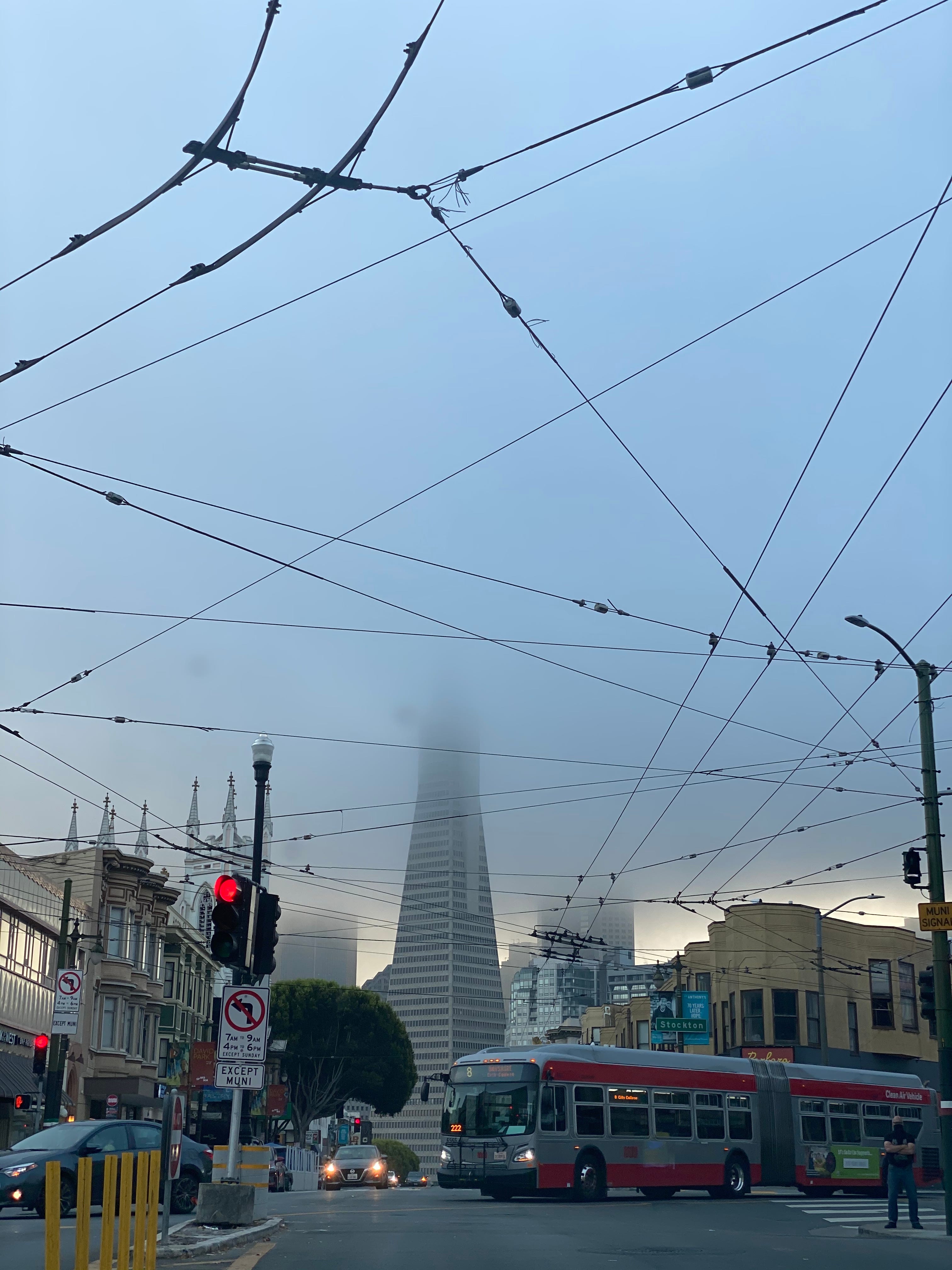
People ask how Francis Coppola became part of my one-shot musical Brother Verses Brother, so I'm sharing this serialized tale, which I hope is inspiring. Our movie is about twin musicians hunting San Francisco for their dying poet father. Here’s Part 4:
In Life, We All Play Ourselves

Stefan Ciupek, our cinematographer, had worked on Russian Ark - 96 minutes through the Hermitage with 2,000 costumed extras. Our film was just 90 minutes through North Beach with idiot twins and a possibly-dead father. Should be easier, right?
Except that extras follow direction, brothers follow grudges.
My Dutch chanteuse friend Lara Louise, who really does perform in all the cafés of North Beach, was my only choice to play the singer who offers my character a small hope of romantic love. The real Lara is happily married, so unlike with the other characters, we subtly changed her name - from Lara Louise to just Louise. She'd never acted, beyond the natural performance of being a working musician in San Francisco. She kept gently offering me ways out - other singers I could cast, friends with more experience - but I had a sense that her natural grace would be a secret weapon for the story.
Sean Baker’s Tangerine had taught me that the neither the camera quality nor the actor-training-level mattered - what mattered was creating circumstances for real life to burst into flower while the camera rolls. So we rehearsed Lara’s mysterious appearance and disappearance, but never her actual dialogue. I wanted her to float through the film like a jazz clarinet.
The Celebrity Playing Himself
Brian Bell from Weezer brought a different challenge. How do you direct someone whose actual fame is part of the plot? During our prep calls, Brian was game to make fun of being a rock star. He’s been studying acting with diligence for some years, and we’d made a $60 short film together which proved how funny he could be. But now Brian Bell from Weezer would be playing “Brian Bell From Weezer.” Should he play an aloof rock star” No,” I said, “not an actual aloof rockstar, but a guy who’s accepted that people think he might be an aloof rockatar. In other words, charming.”
The brilliant thing about Brian’s daily-increasing-acting-chops was his willingness to lean into self-mockery without losing believability. We mapped out his scene at Specs Adler Museum and Café (whose owner was excited to meet him) to be unexpected, magnetically pulling the focus of the audience (and Louise) from our twin-bro amateur hour.
The Family Workshop
Preparing Ethan and Dad was like asking fish to notice water. They'd been performing these roles their whole lives: Ethan, the profound artist with a bit of despair about the world’s cruelty. Dad, the literary lion who lost the love of his life, and who always seemed to be waiting for you to stop talking so he could begin. The challenge was getting them to play these parts without looking at the camera, and within the pacing confines I’d set out in my script. In a film with no cuts, I wouldn’t be able to trim a bloated scene to make it sing, so I was martial in my prep about the scenes hitting the emotional beats without too many diversions. Then again, I knew that the diversions were where it would get interesting.
Ethan understood musical pacing, so we spoke in musical terms. "This scene needs more staccato." Dad was trickier. At 99, he didn't have much energy, and preparing him to wait patiently for cameras to barge into his apartment made him a little anxious. But he moved his New York Times-reading ritual from morning to evening to calm his nerves. And he wanted to look vigorous for the camera, even if his character was dead. Anyway, he understood dramatic structure as well as any of us—25 novels teach you about rising action. During prep, I'd just talk him through the shape of “Herb’s” climactic scene, where… well, sorry, I don’t want to spoil it.
The Poet Laureate Wildcard
To play a friend of Ethan’s we meet on the street, the most fun casting decision was our producer Starr Sutherland’s idea to bring in Tongo Eisen-Martin, San Francisco's Poet Laureate, whom I'd never actually met. The plan was for me to encounter him for the first time on camera, genuinely not knowing what would happen. Russian roulette with poetry, traffic, and strip clubs.
The only prep was logistical. Where would he be? How would we find him? What if he felt compelled to deliver a 2-hour poetry sermon that destroyed the film’s pace? Stefan and I mapped escape routes and hand signals, knowing we might need to abort mid-scene if Tongo decided to kidnap the film. But Starr assured me that Tongo was also a musician - he would understand timing. Anyway - real surprise would cause real reactions.
The Hell's Angel and His Attack Chihuahua
I wanted a Hell's Angel to rough me up at the Saloon. Lara, being the queen of the neighborhood, sweetly asked the bouncer, Shane, if he might want to act in a film. He didn’t seem to mind either way, but he apologized that due to club rules, he wouldn’t be able to wear his Angels jacket. Like many tough guys, he’s a gentle person underneath the leather. That said, you haven't lived until you've negotiated violence with a biker holding a chihuahua named Honey.
"So when I say I'm looking for Louise, you maul me."
"How hard?"
"No bruises. Anything else is fine."
The Light Calculator
The most complex casting was the sun itself. We had to backwards-engineer the entire shoot from night into day. Stefan and I spent days calculating light patterns, measuring when golden hour would hit different streets and buildings. The story needed to move from sunset to melancholic dusk to night and the shadow of death, all within 90 minutes of real time.
This meant timing every scene to hit specific light marks:
5:47 PM: Start at Kerouac Alley in full afternoon light
6:15 PM: Reach Specs as shadows lengthen
6:45 PM: Climb the hill as the dusk sweeps the city
7:10 PM: Arrive at Dad's as night comes, to find him—
One traffic jam, one too-long improvisation, one actor forgetting to move, and we'd be finishing in the wrong light. Stefan and I walked the streets with a stopwatch, Stefan calling out traffic warnings like a stage manager. We were building a story out of light’s vanishing.
The Unified Theory of Chaos
What I learned preparing all these non-actors was that everyone already knows how to be in a movie. Even the sun knew its role. It’s about opening the door to play.
We play parts all day long. In the film’s ninety minute story, I would play the worried brother, the pushy brother, the unemployed film director, the delusional romantic, the loving son.
How many parts do we all play in any span of any 90 minutes?
The trick wasn't teaching ourselves to act. It was creating conditions where our real selves would serve the story. Where Ethan's actual frustration with me would be real. Where my panic about the film could also be a character’s panic about a missing father.
We weren't making a documentary, but we were capturing real play. The preparation, I guess, was just coaxing everyone to be themselves at the right volume for the camera, and for the dance between the people and the city to generate its own rhythm — something that would carry the emotional momentum of fiction, even if this was a version of truth.
Next time: How to map chaos, with a lesson from Werner Herzog.