


People ask how Francis Coppola became part of my one-shot musical Brother Verses Brother, so I'm sharing this serialized tale, which I hope is inspiring. Our movie is about twin musicians hunting San Francisco for their dying poet father, and we all play versions of ourselves.
How Poetry Sparked a Music Movie
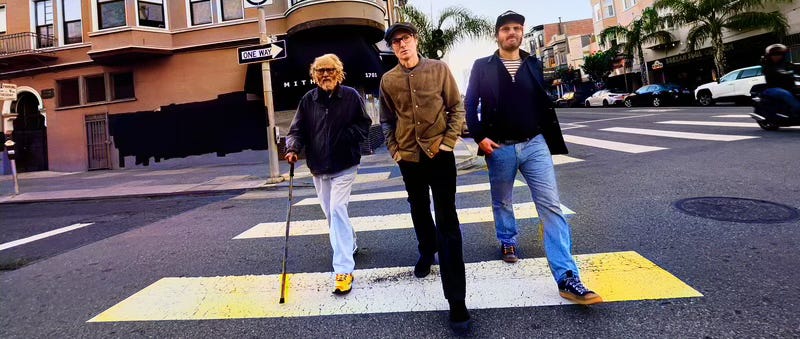
A few weeks into lockdown, I was watching dragonflies screwing mid-flight outside my window when it occurred to me that up in San Francisco, my dad didn’t have anyone to keep him company.
His name was Herbert Gold, and he’d written 25 novels, guzzled coffee with Shel Silverstein, been divorced twice, had dozens of girlfriends, but now, in his late nineties and having survived all his friends, he was isolated. He couldn’t type anymore, and could barely hear me on the phone. (He’d always had trouble listening, but now he could blame hearing aids.)
I had to do something. I’d started writing poetry with friends online, so I wrote one called “Scribble Me a Poem” and sent it by US Mail, with a self-addressed return envelope:
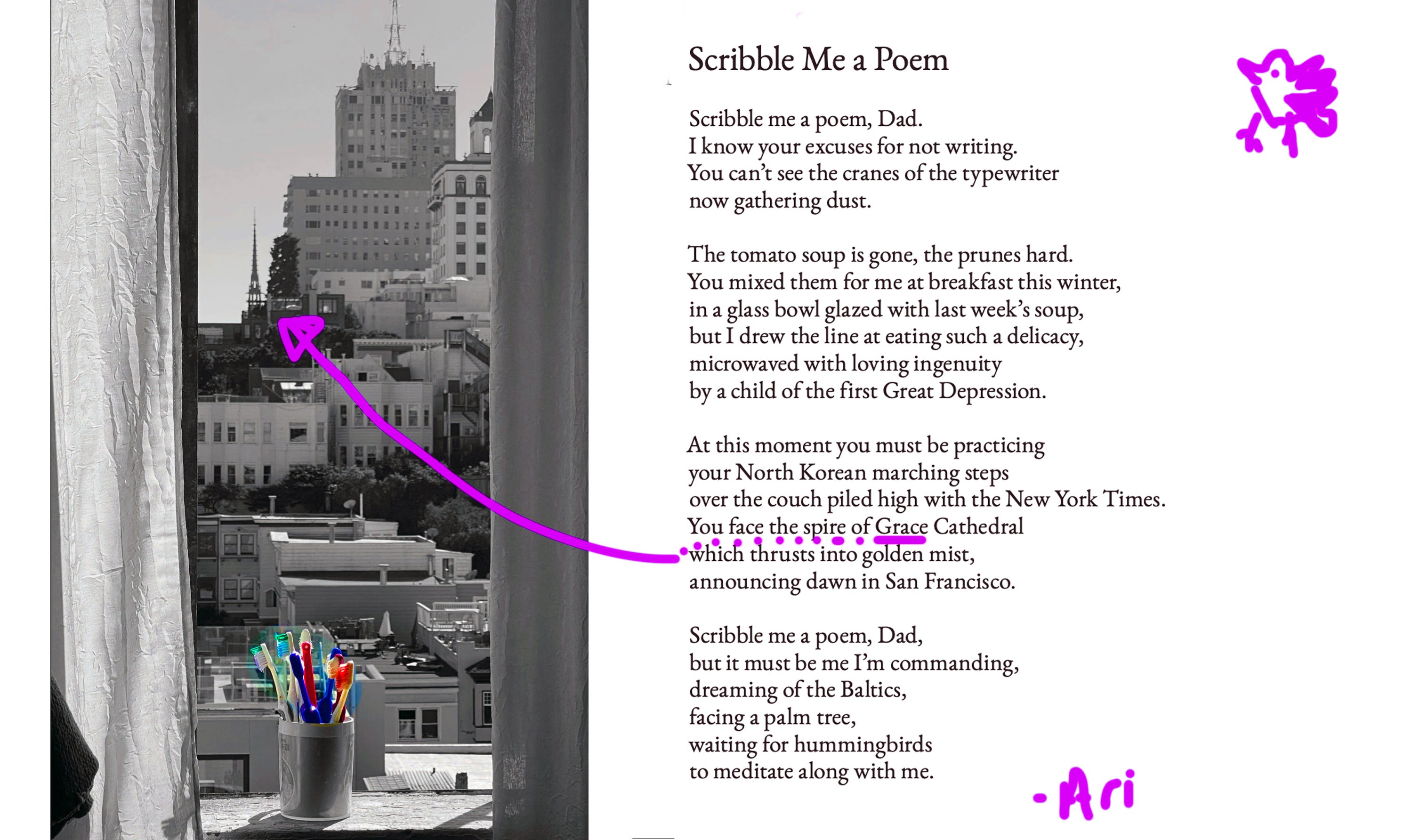
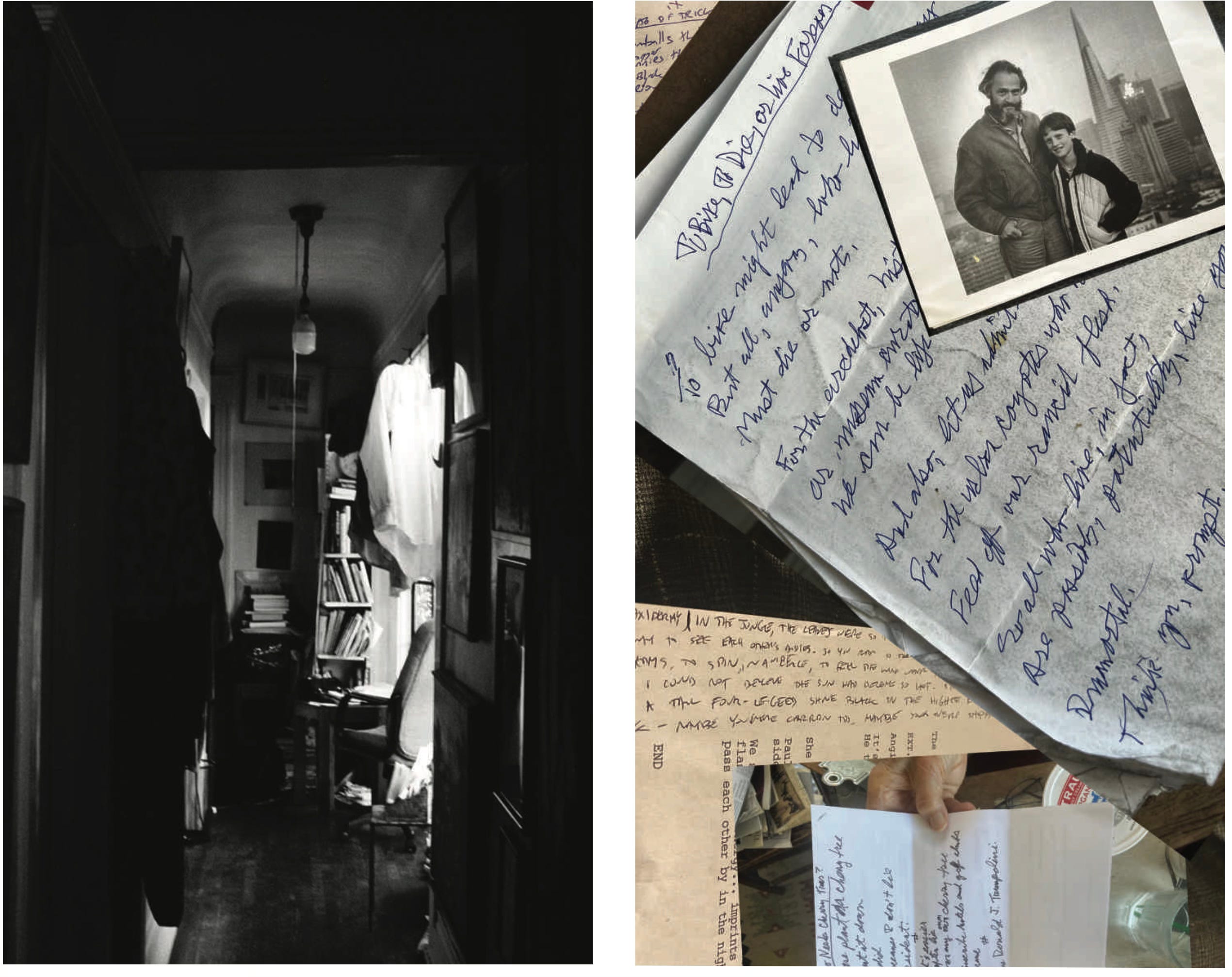
I received a hand-scribbled poem back (typed for you below… his handwriting was crazy).
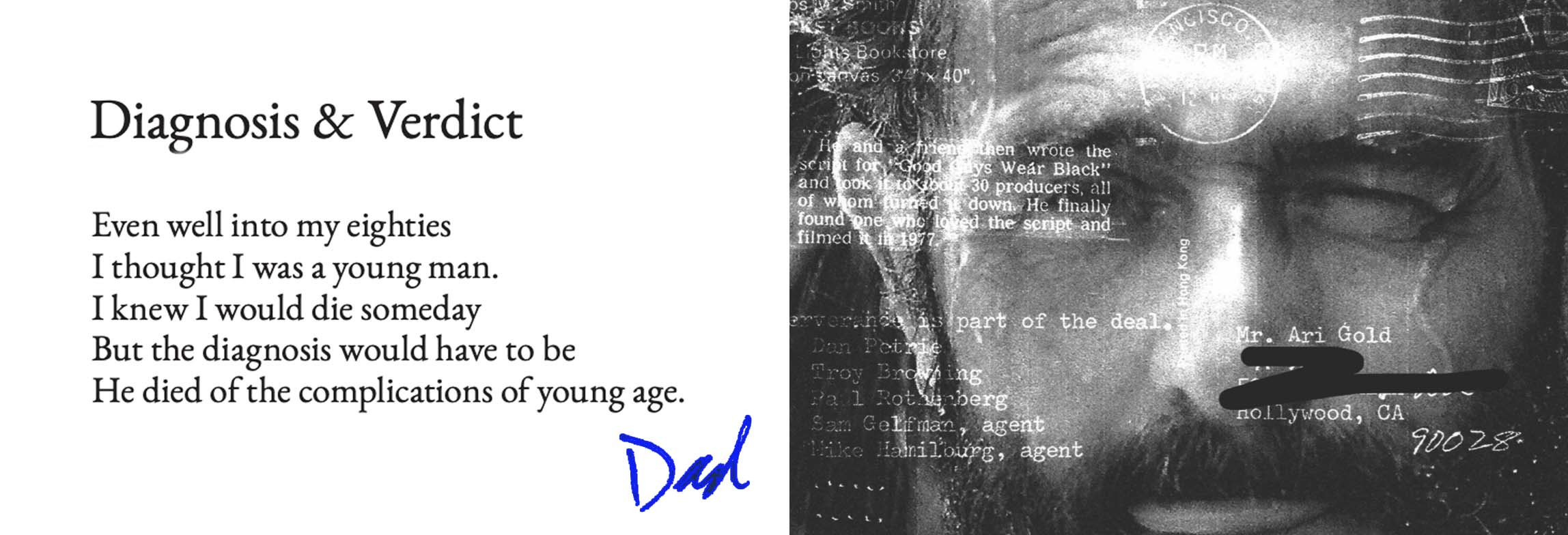
Thus began a Troubadour-like competition by mail. His poems were leaner, and had the urgency of someone who has little time to dawdle. We wrote things we’d never said, and made up for physical contact with secrets about love, death, tomato soup, and a sexy young woman named Kimmie Lister who appeared in his dreams - and whom he asked me to track down on my “magic machine,” which is what he called my phone. (I couldn't find her.)
When the world opened up again, I compiled collages to go with the poems, and proposed we read the book Father Verses Sons aloud to City Lights Books on his upcoming 100th birthday - and make a movie too, which could start at the same spot: Kerouac Alley. He laughed at the idea.
My dad despised Kerouac.
The Beat Generation’s Last Witness
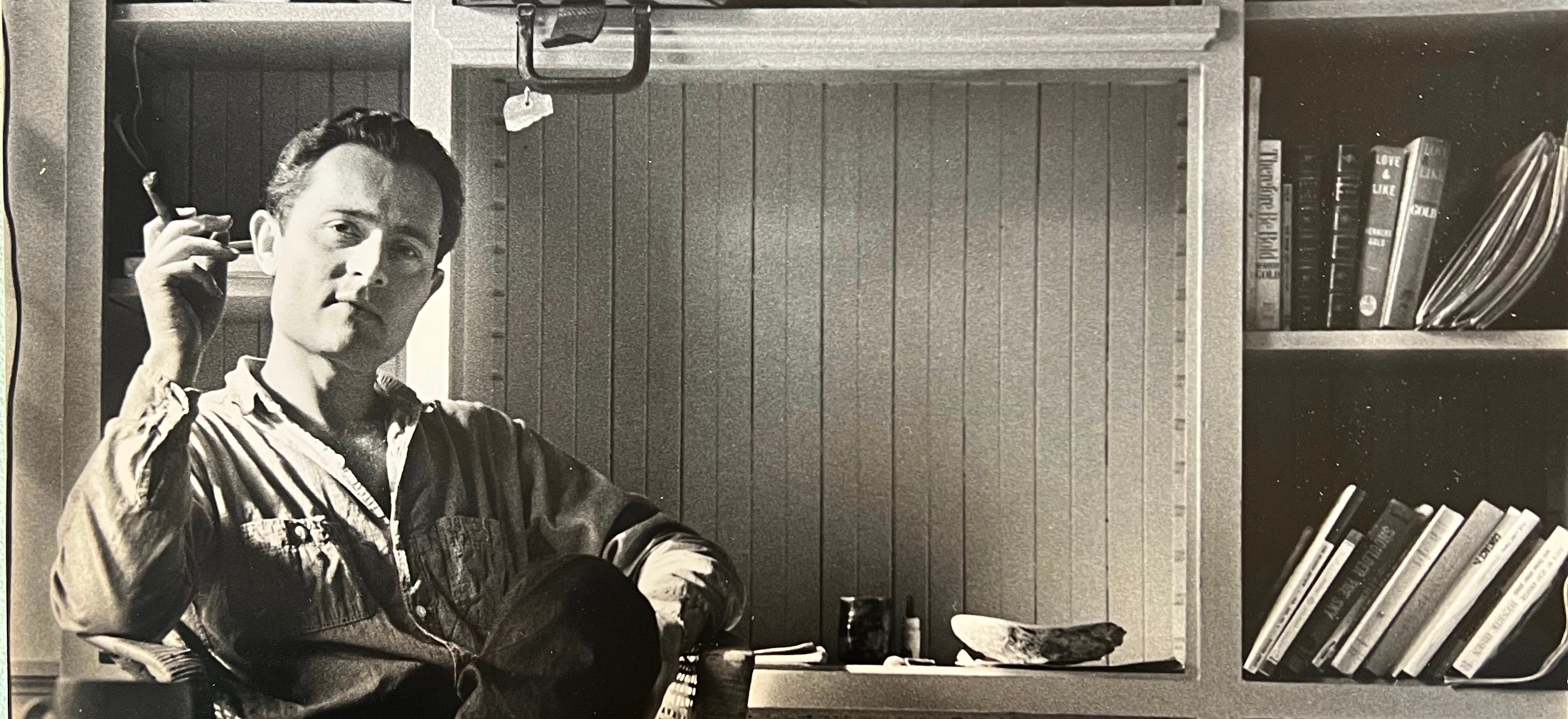
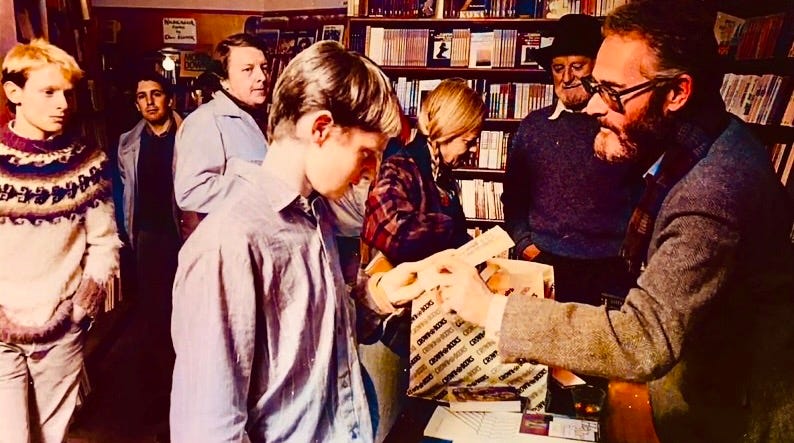
Herbert Gold first visited City Lights when his college buddy Allen Ginsberg dragged him there to prove that San Francisco was cooler than New York. Midway through a tennis serve in the park, the California sun hit my dad’s eye, and he knew he was never going back. He chose a studio apartment overlooking the neighborhood, and became a “San Francisco novelist.”
He was teased by his compatriots for not tuning in, turning on, or dropping out. Maybe this explained him outliving them all.
Now 60 years later, the once-bare walls of his bachelor pad were obscured by Haitian paintings, photos of his five children, and mountains of magazines and books, the latest entitled Still Alive - A Temporary Condition.
Until recently, he’d been too embarrassed to write poetry. Our book would prove that you can teach an old dog new tricks.
In one poem, he calls me his “impatient, sad son.” Though he’d had a parade of girlfriends, I always knew that he’d lost the love of his life, my mother, through a masculine clumsiness that I hated as a boy. I worked to forgive his imperfections too, through poems that promised I would live and love on.
Writing poetry about a father or son is like performing surgery on yourself, with laughing-gas as anesthetic. For me, an unemployed film director, it also gave me the gratification of actually completing something daily. With movies, and their huge financial and technical demands, too much patience was required of an impatient sometimes-sad son.
But now my dad was 99, and I wanted him to act in my next movie, so my impatience seemed rational.
I found a path in my brother’s music. At the age of six, my twin brother Ethan wrote a post-divorce song called “Dum Daddy Dum, Best Mommy Best,” which was so catchy that we sung it incessantly, to my dad’s irritation.
Now, Ethan’s music could suggest the multi-generational tale in a more forgiving way. And though guitar-and-ukulele songs would guide the film, I wanted the audience to experience the Beatnik jazz of the neighborhood too - a narrative version of Jack Kerouac and the great David Amram’s Pull My Daisy.
As I sat plotting Brother Verses Brother (the movie) on the floor of Dad’s hovel, I also tweaked the layout of Father Verses Sons (the book). These weren’t separate art forms competing for my attention—they were parallel sets of Verses about legacies of male loneliness and love.
But why the hell was I doing art that cut so close to the bone? To redeem a once-sort-of-famous writer now being forgotten? To redeem my brother and me?
I only knew that the book and movie could be a conversation between fathers, sons, lovers - between past and present - between words we say, and the bigger words we don’t know how to say.
That the more specific it got, the more it might speak to people.
So, Coppola’s Live Cinema challenge became not a technical feat, but a way of becoming present to the real moments. Verses of song, poem, cinema. The book would be non-linear and cyclical. And the film would live in that painfully linear perception of time - flickering without a single cut towards night, death, and the light of truth - if we could get it right.
Independent movies live by word of mouth, so if you’re enjoying this, please pass it on, and/or support with a paid subscription, and/or follow me & Ethan & the movie on Instagram too, for photos and updates of our tour! And let me know your thoughts and questions. Thank you very much for reading. 🧜♂️ Ari